WE RESPOND TO YOUR NEEDS 414-271-1440
Recent Blog Posts
Companies Developing Marijuana Breathalyzers
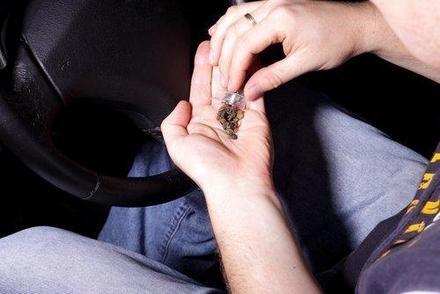 One of the biggest political controversies across the country today is the creeping legalization of marijuana. Many states have legalized marijuana for certain medical uses, and some have even gone so far as to legalize it for recreational use. This spate of legalizations presents a new issue, the likely increase in people driving under the influence of marijuana. In order to deal with this, both companies and universities are attempting to develop and commercialize marijuana breathalyzers for use by police forces. These breathalyzers have the potential to make enforcement of OWI laws more objective and scientific, but there are also some issues with their introduction.
Potential Benefits
The major benefit of these breathalyzers would be their objectivity. Right now, police officers are mainly forced to rely on their judgment to determine if a person is driving while under the influence of marijuana. They have to look for things like bloodshot eyes, failure of field sobriety tests, the smell of marijuana, and the presence of drug paraphernalia. While some of these may be strong indicators of an OWI, a person with bloodshot eyes who fails a field sobriety test could also simply be suffering from fatigue. The only way to be sure is to then bring the person back to the station to test their blood or urine for the presence of marijuana.
These marijuana breathalyzers could change that. They could provide police with a convenient way to test for marijuana, and determine if it was worth bringing the person back to the station for a more thorough test. This could also benefit drivers since it would make it less likely for police to bring people back to the police station based on inaccurate suspicions.
Possible Concerns
However, there is also a good reason to be concerned about these new breathalyzers, particularly in Wisconsin. Wisconsin is known as a “zero tolerance” state for marijuana OWIs. This means that any detectable amount of marijuana in a person's system is enough to justify an OWI conviction. This could make marijuana breathalyzers a serious problem because they could lead to an over-enforcement of OWI laws.
There is a big difference between having a detectable amount of marijuana in a person's system and having their driving impaired by the marijuana. Marijuana can be detectable for days or weeks following the use. This means that a person could come from a state where the use of marijuana is legal, and then be successfully charged with “impaired” driving weeks later. Consequently, the use of marijuana breathalyzers may require a change to Wisconsin's OWI laws.
OWI charges can result in serious penalties, especially for repeat offenders. If you have been charged with an OWI and want to learn about your options, contact a skilled Milwaukee criminal defense attorney today.
One of the biggest political controversies across the country today is the creeping legalization of marijuana. Many states have legalized marijuana for certain medical uses, and some have even gone so far as to legalize it for recreational use. This spate of legalizations presents a new issue, the likely increase in people driving under the influence of marijuana. In order to deal with this, both companies and universities are attempting to develop and commercialize marijuana breathalyzers for use by police forces. These breathalyzers have the potential to make enforcement of OWI laws more objective and scientific, but there are also some issues with their introduction.
Potential Benefits
The major benefit of these breathalyzers would be their objectivity. Right now, police officers are mainly forced to rely on their judgment to determine if a person is driving while under the influence of marijuana. They have to look for things like bloodshot eyes, failure of field sobriety tests, the smell of marijuana, and the presence of drug paraphernalia. While some of these may be strong indicators of an OWI, a person with bloodshot eyes who fails a field sobriety test could also simply be suffering from fatigue. The only way to be sure is to then bring the person back to the station to test their blood or urine for the presence of marijuana.
These marijuana breathalyzers could change that. They could provide police with a convenient way to test for marijuana, and determine if it was worth bringing the person back to the station for a more thorough test. This could also benefit drivers since it would make it less likely for police to bring people back to the police station based on inaccurate suspicions.
Possible Concerns
However, there is also a good reason to be concerned about these new breathalyzers, particularly in Wisconsin. Wisconsin is known as a “zero tolerance” state for marijuana OWIs. This means that any detectable amount of marijuana in a person's system is enough to justify an OWI conviction. This could make marijuana breathalyzers a serious problem because they could lead to an over-enforcement of OWI laws.
There is a big difference between having a detectable amount of marijuana in a person's system and having their driving impaired by the marijuana. Marijuana can be detectable for days or weeks following the use. This means that a person could come from a state where the use of marijuana is legal, and then be successfully charged with “impaired” driving weeks later. Consequently, the use of marijuana breathalyzers may require a change to Wisconsin's OWI laws.
OWI charges can result in serious penalties, especially for repeat offenders. If you have been charged with an OWI and want to learn about your options, contact a skilled Milwaukee criminal defense attorney today.
Expungement in Wisconsin
 One of the most difficult parts of a criminal conviction is the continuing existence of a criminal record. Long after people have served their time and reformed themselves, they can still find their criminal record holding them back, preventing them from getting work, housing, or state licensing. Wisconsin law does allow for people to have their criminal records expunged in certain circumstances. However, it is important to note that Wisconsin's laws on expungement are particularly harsh. They do not provide as many benefits as some states' laws do, and they can also only be accessed for a limited number of reasons.
How Expungement Works
Expungements in Wisconsin are available to only a limited group of people, usually those who committed their crimes as juveniles or young adults. In order to qualify for an expungement, a person must meet four criteria. First, they must have committed the crime while they were under the age of 25. Second, the crime must be a misdemeanor or certain low-level, non-violent felonies. Third, the person must have successfully completed their sentence, which includes things like complying with the terms of probation following a release from prison. Fourth, the court must determine that the offender stands to benefit from an expungement and that such an expungement would not go against the public interest.
Strategies for Beating an OWI
 OWIs can be serious charges that come with expensive penalties, especially for people who have prior OWIs on their records. Many people risk driving drunk because they think they will not get caught. Yet, there are tens of thousands of OWI convictions every year, according to statistics compiled by the Wisconsin Department of Transportation. Consequently, people should be aware of the different strategies Wisconsin OWI attorneys can use to fight an OWI conviction after the charges occur. These strategies include taking advantage of the burden of proof, fighting to exclude evidence, and contesting evidence that cannot be excluded.
The Burden of Proof
One key point to understand about the criminal justice system is that the burden of proof rests on the prosecution. This leads to the often recited line that people are innocent until proven guilty. In a practical sense, this means that it is the job of the prosecutor to prove the case, not the person's OWI defense attorney. This is an important strategic point. A person accused of an OWI does not need to prove they were sober. They merely need to knock out key portions of the case against them that would prove drunk driving.
The Entrapment Defense in Wisconsin
 Many legal and police-based TV shows raise the issue of an “entrapment” defense at some point during their run, but the defense is often not as simple as those shows imply. The entrapment defense is an argument available to criminal defendants that the police tricked them into committing a crime that they would not have otherwise committed. The defense arises most often in cases where the defendant was caught by an undercover officer, such as in prostitution stings or undercover drug buys. However, proving entrapment as a defense requires more than just showing that the officer deceived the defendant in some way.
Proving Entrapment
The important thing to understand about entrapment is that it is a high bar to meet. Mere deception on the part of the police is not enough, and neither is simply providing the defendant with the opportunity to commit a crime that they would have otherwise committed. Instead, the defendant has to show that the police somehow induced them to commit a crime they would not have engaged in without police interference. Undercover drug sales make a good example for showing the distinction between providing an opportunity and inducing the crime.
The Harsh Reality of Being Charged with Retail Theft
 In Wisconsin, an individual charged with retail theft could not only be the subject of a criminal lawsuit, but a civil one as well. What most people do not know is that retail theft is a very serious crime in Wisconsin. Not only do allegations of retail theft carry severe criminal penalties, but the idea of a civil lawsuit hanging over your head can be extremely pleasant.
Under Wisconsin law, retail theft ranges from a Class A misdemeanor to a Class G felony. If you are charged with the theft of items worth less than $500, you will be charged with a Class A misdemeanor and will be subject to punishment of up to nine months in jail and up to $10,000 in fines. But if you are charged with stealing over $10,000 worth of items, you could face up to $25,000 in fines and up to 10 years in prison. If you have prior retail thefts on your criminal record, you will be subject to harsher punishments.
Catching Fire: The Story of Arson
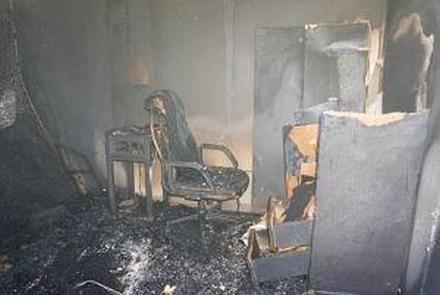 Historically, arson was narrowly defined as the malicious burning of the dwelling of another. This meant that you could only be charged with arson if you intentionally burned the residence of another. Today, especially under Wisconsin law, arson is a felony and has been expanded to include, by means of fire, the intentional burning of a building of another, without consent. This definition includes any building, or structure. You could even be charged of arson if you burned a motor vehicle.
Arson is a serious property damage crime and if you are convicted of arson, you could face steep fines and a lengthy prison sentence. There are distinctions in the law that determines the fines and possible jail time you could face if found guilty of arson. If you are found to have intentionally burned a building, you will face much more serious fines and jail time than if you were found to have negligently burned the building. Likewise, if you burn your residence down to collect the insurance money, you could be charged with arson and insurance fraud.
Conspiracy: The Punishment of Collaboration
 Under Wisconsin law, conspiracy is defined as an agreement between two or more persons with the intent to violate the law. To be convicted of conspiracy, it has to be shown that an act was taken to further the goals of the conspiracy. Likewise, the same elements need to be proven under federal law.
Conspiracy boils down to a very simple concept. A conspiracy begins when one person agrees with one or more persons to commit a crime. As soon as any single member in the agreement takes a step towards carrying out the crime, the agreement becomes a conspiracy. This step is called an overt act and it does not matter how minimal it is. It does not matter if the overt act is a crime; further, even if you do not commit the overt act, you could still be charged with conspiracy.
For example, say you entered into an agreement with two co-conspirators, B and C, to rob a grocery store owner. B purchases a knife to threaten the owner of the grocery store. C steals a car to escape the grocery store at the time of the crime. You were on your way to meet B at the grocery store, but you were hit by a bus and taken to the hospital. B and C go to the grocery store, rob the owner and escape in the stolen car. You could be charged with conspiracy, even though you did not commit an overt act nor were you present when the crime was committed. The simple fact that you entered into an agreement to violate the law and a member to that agreement took an overt act to commit the violation, exposes you to criminal conspiracy charges.
The Harsh Truth about Facing Homicide Charges in Wisconsin
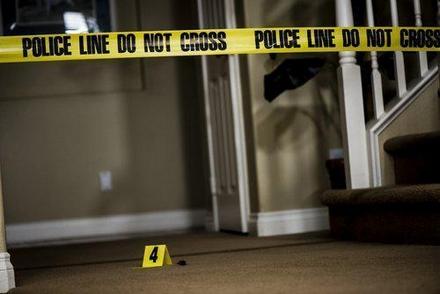 In our society, not all homicides are considered crimes. Homicide occurs when one individual takes the life of another individual. Depending on the circumstances, some homicides are lawful while others are unlawful. For example, murder and manslaughter are violations of criminal laws but a homicide committed in a justified action of self-defense is not considered a violation of criminal law.
- The negligent handling of a dangerous weapon, explosives or fire;
Defending against Health Care Fraud Charges
 It would seem that every time you check the news, someone is being charged with healthcare fraud. For example, recently, a podiatrist was charged with committing 30 counts of healthcare fraud when he billed Medicare for trimming toenails of patients, which is not considered a medical procedure. Back in January, the Medical College of Wisconsin was charged with healthcare fraud when they billed the federal government for neurosurgeries involving resident doctors when supervising doctors were not present for key moments in the procedures, which is a requirement in order to receive compensation from the federal medical programs.
What is Healthcare Fraud?
The question remains — what exactly is healthcare fraud? In its simplest form, healthcare fraud occurs when a medical professional submits false statements to a federal medical program, such as Medicare, for procedures that were not performed or were not medically necessary. Sometimes, the medical professional will use the code for a procedure that pays more than the actual code of the procedure that was performed.
Sexual Assault Charges in Wisconsin
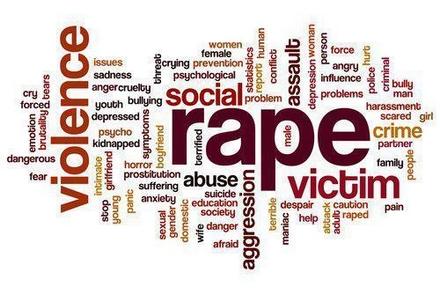 In most states, unwanted sexual encounters committed by force or threat of force are generally classified as rape. However, Wisconsin law defines rape as sexual assault.
According to the Wisconsin Statistical Analysis Center, almost 50 percent of sexual assault victims are acquaintances with the alleged perpetrator. Thirteen percent occurs between family members, while nine percent are said to occur in relationships. Therefore, over 72 percent of the alleged sexual assaults that occurred in Wisconsin during 2013 involved individuals who were friends, acquaintances, relatives or in intimate relationships.
Four Degrees of Sexual Assault
Depending on the circumstances of your case, you could be facing first or fourth-degree sexual assault. First-degree sexual assault is a narrow category of crime that occurs when you are charged with having non-consensual sexual intercourse with another person and pregnancy or great bodily harm results. Also, when the allegations involve force or the threat of force with a dangerous weapon, the charges would also fall under this category.